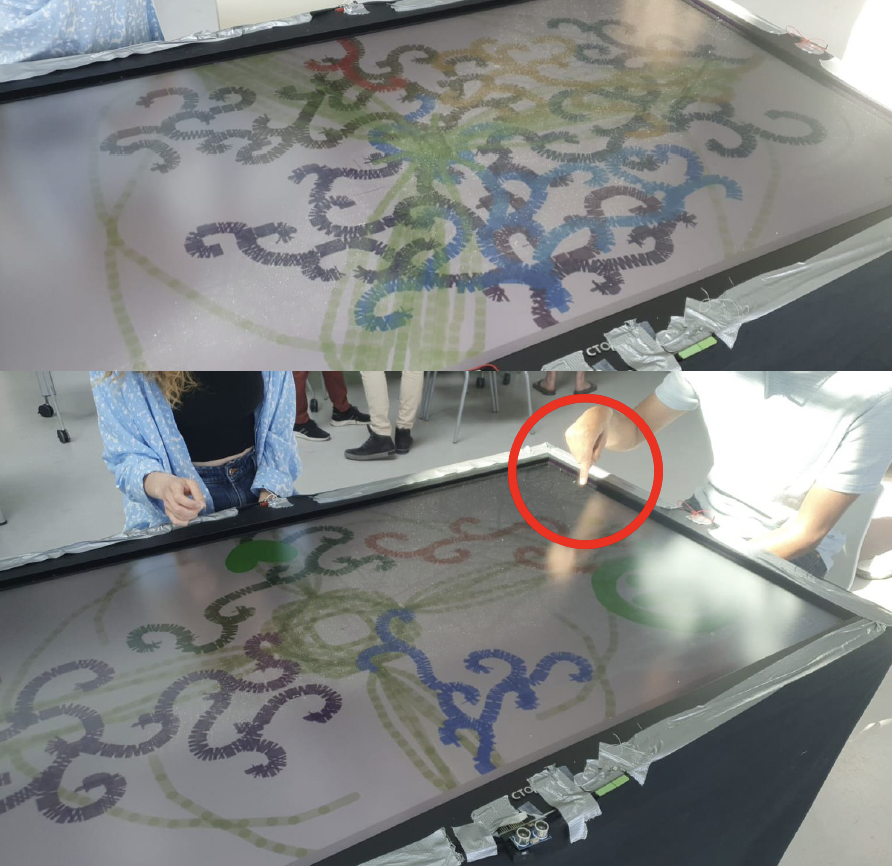
A table that listens to your conversation and draws it in real time. Designed to help people with different communication styles connect, without telling anyone how to behave.
When autistic and non-autistic people meet for the first time, both sides often feel like something is off. Neither is wrong. Their social expectations just do not match.
The Embodied Interaction course gave us an open brief with two possible problem spaces: post-covid social closeness, or first-time group interactions between autistic and non-autistic people. We chose the second, not because it was easier, but because most technology in this space is designed to modify autistic behaviour to fit neurotypical norms. We wanted to try something different: design for the interaction itself.
This mismatch is sometimes called the double empathy problem: a difference in social norms and expectations that can make first impressions difficult on both sides. Non-autistic people sometimes misread autistic communication styles, and autistic people are often left navigating social conventions that were not designed with them in mind.
The result in group settings is unequal turn-taking, missed cues, and the kind of silence that feels awkward even when no one is doing anything wrong. Our ethnographic observation study, observing a neurodiverse group meeting for the first time, confirmed four specific friction points: difficulty taking the turn, not knowing if the other person is comfortable, struggling with eye contact expectations, and the pressure of unexpected silences.
Rather than designing a tool to help one group adapt to the other, we asked a different question: what if you could make the dynamics of the conversation visible to everyone, and let people adjust on their own terms?
Three prototypes, each one testing a different hypothesis about what kind of embodiment could support the interaction.
Conversation Swing
The first idea addressed a different context entirely: one-on-one eating with a stranger. Two seats physically connected so that every movement affected the other person. A digital ball projected on the table whenever silence ran too long, prompting both people to move and play together.
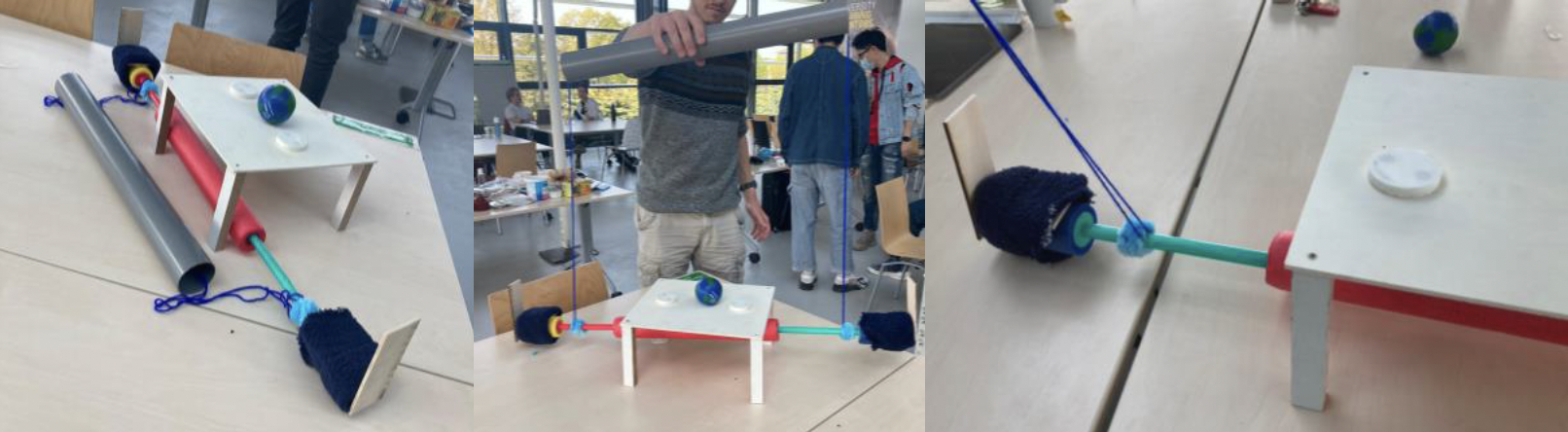
We were not convinced by the feasibility, but we kept two core qualities from this first idea: physical connection prompting emotional connection, and a design that actively participates in the interaction rather than sitting passively. Those principles carried through to everything that followed.
Conversational Strings
After the ethnography study reframed the problem around neurodiverse interactions, we built a simpler physical prototype: elastic strings connecting all participants to a central box. Pulling the string signalled wanting to take the turn. The tension itself communicated urgency and engagement.
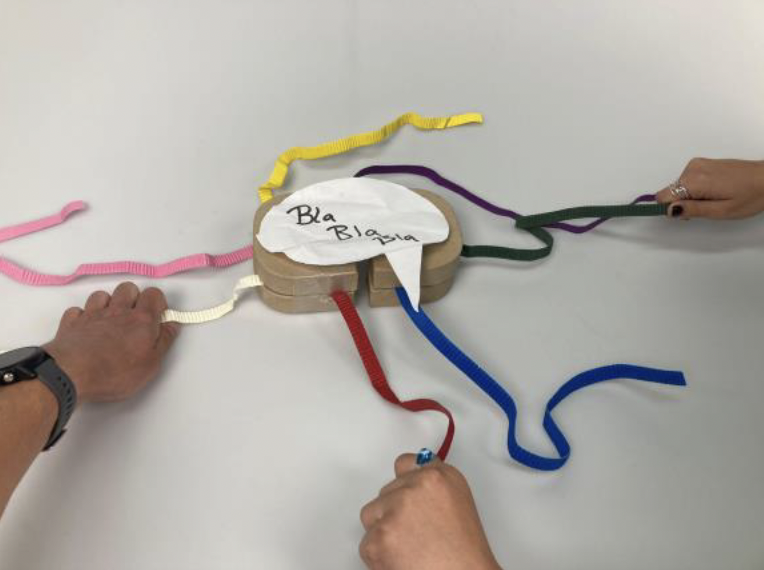
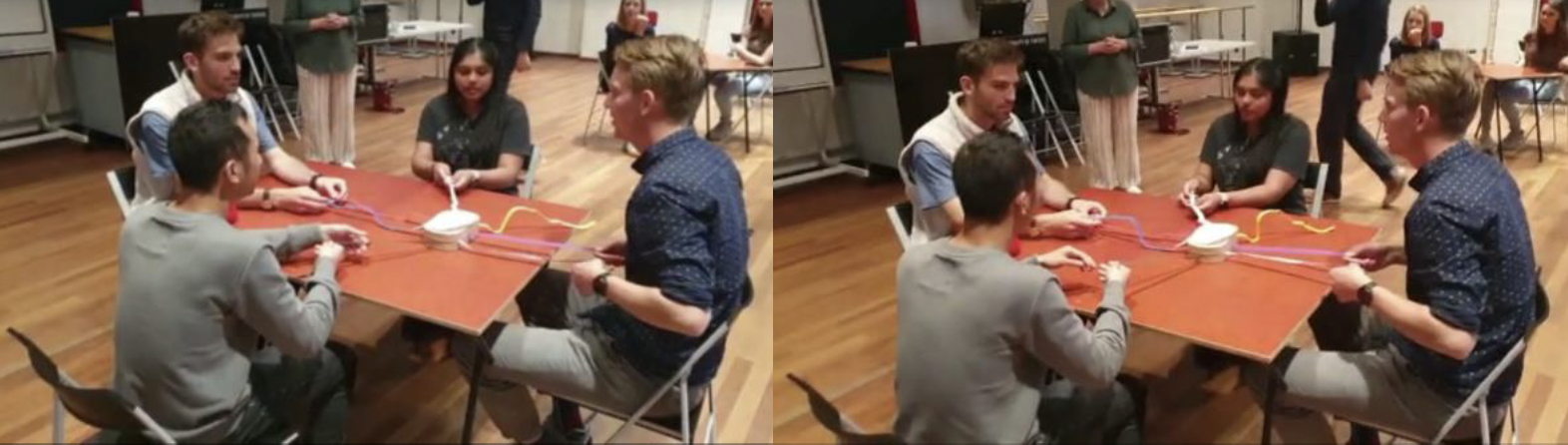
The workshop revealed something we had not anticipated: the strings introduced a competition dynamic. People would pull the box toward themselves and not let go. What we designed as a turn-taking aid became a power play. That observation directly shaped the next iteration: we needed to frame conversation as a collaborative effort, not a contest.
ConverTable
The final concept: an interactive table that uses audio sensors and speech detection to track who is speaking and who is listening, then visualises this in real time as generative art on the table surface. Each participant gets a colour. The more you speak, the more your colour grows. Listening is visualised too. The conversation becomes something you can see, touch, and interact with.
A key interaction detail: participants can touch the visualisations on the table to signal wanting to take the turn. The shape changes in response, attracting the others' attention without requiring eye contact or an interruption.
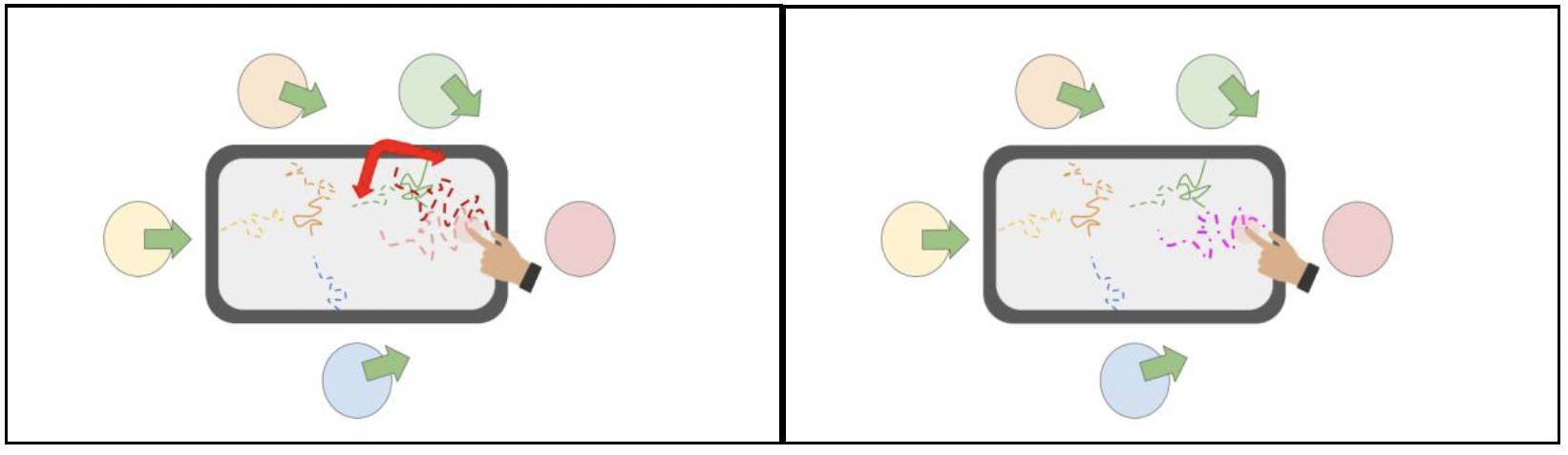
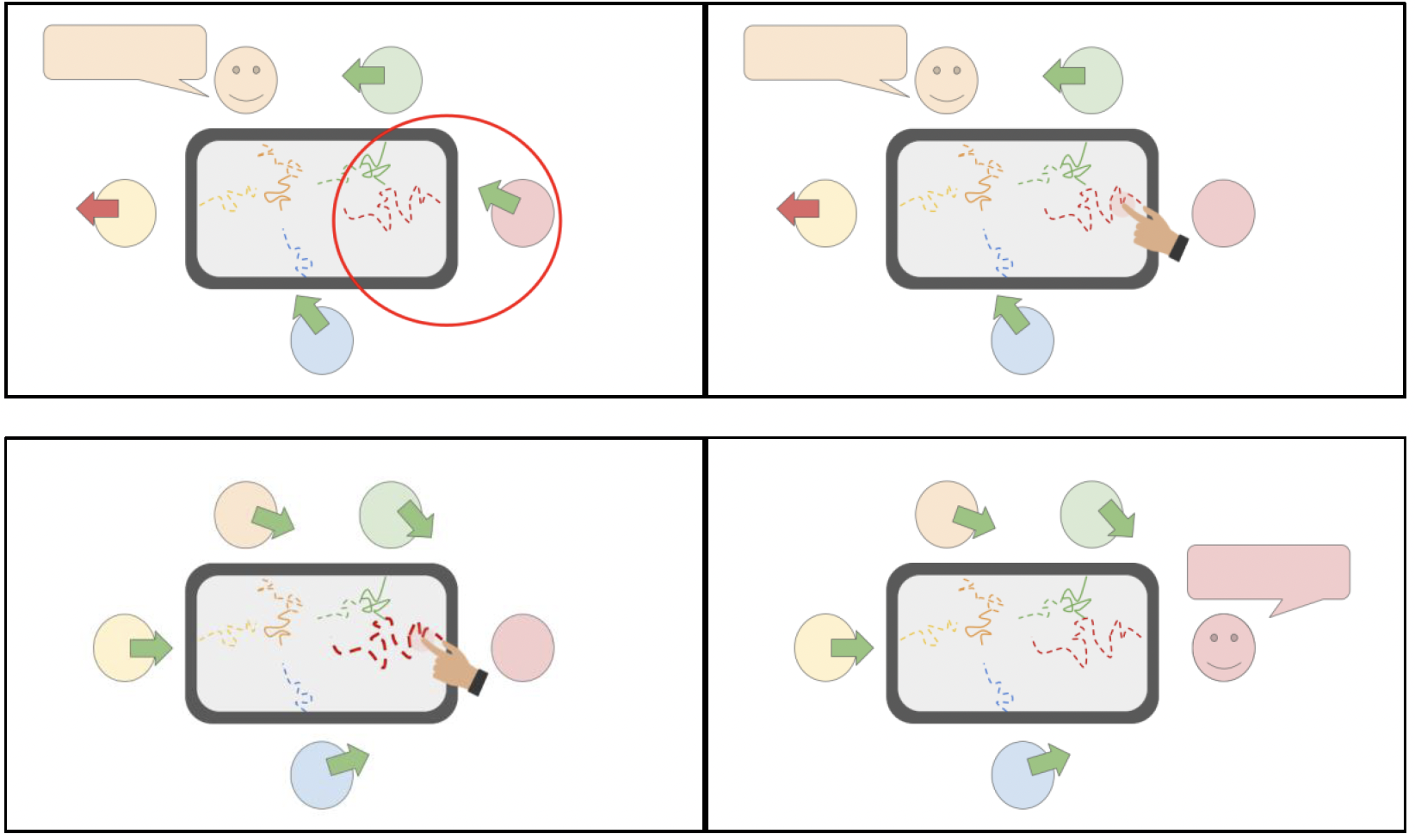
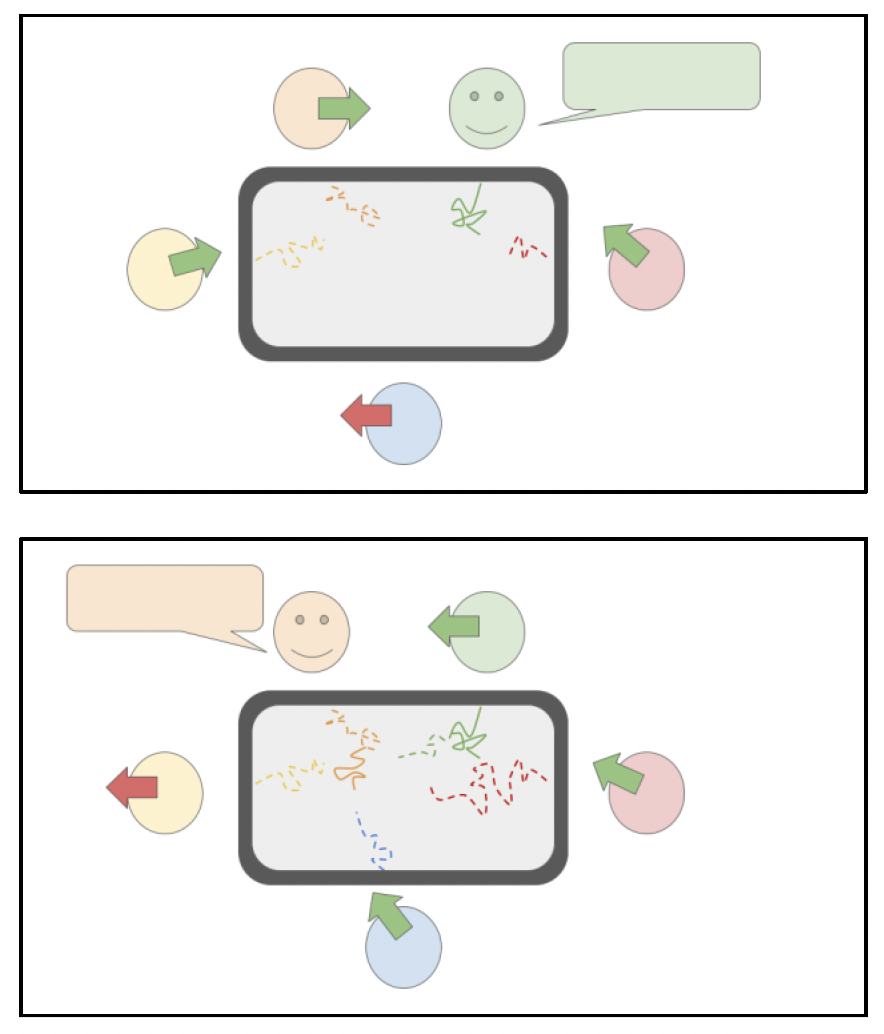
To test the concept before building the full sensor system, we ran a Wizard-of-Oz study. A CTOUCH touchscreen wrapped in cloth to resemble a table. One researcher observed the conversation and manually drew the visualisations on a collaborative drawing tool displayed on the screen.
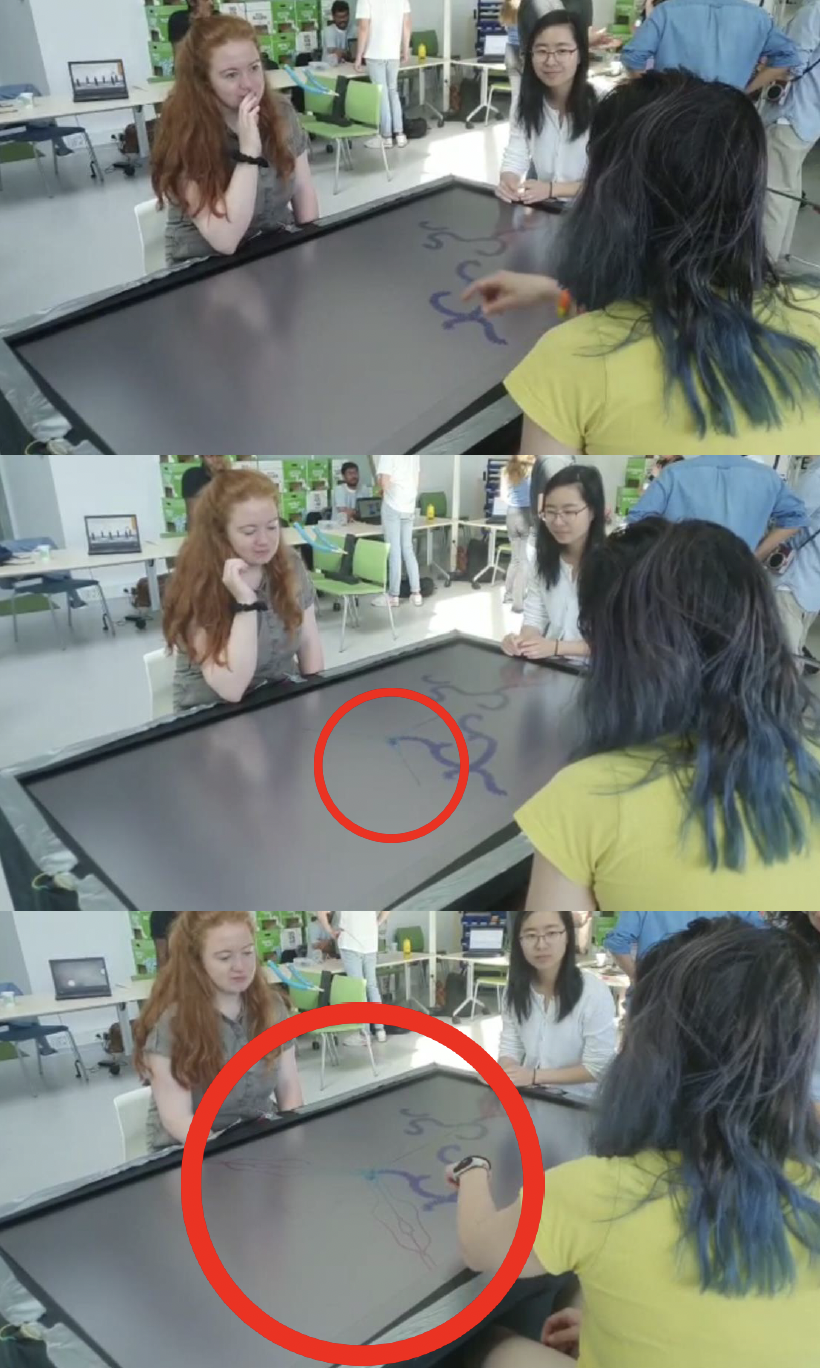
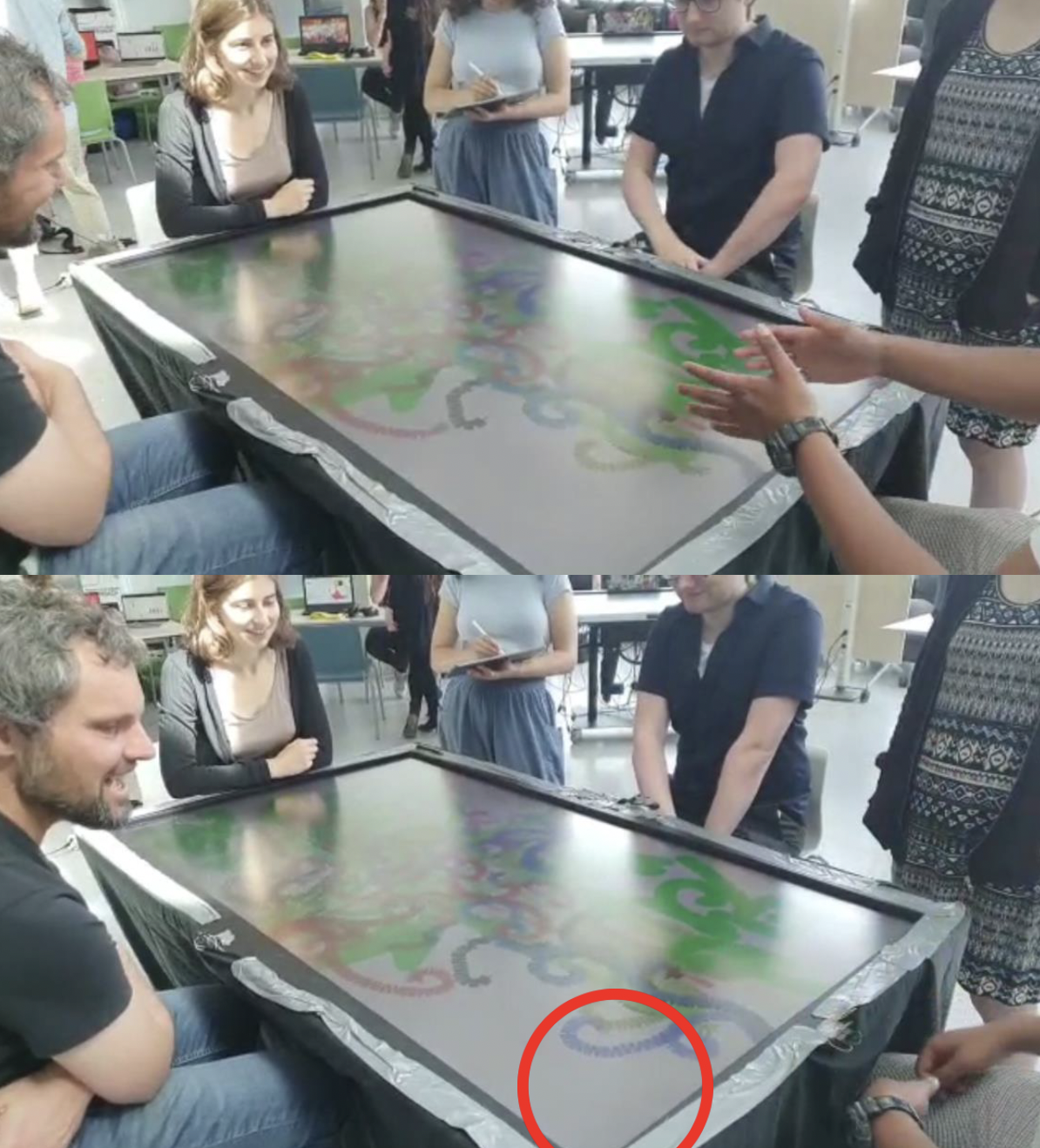
The WoZ sessions confirmed the core hypothesis: making conversation dynamics visible changed behaviour without anyone being asked to change.
Participants engaged with the visualisations naturally and without prompting. When one colour dominated the table, the speaker noticed and pulled back. When lines began connecting everyone, people leaned in. Nobody was told what the colours meant or what to do with them. The system did not correct anyone or prescribe how conversation should go. It made something visible that is normally invisible, and people responded to that on their own terms.
The turn-taking signal worked without instruction. Participants touched the visualisation when they wanted to speak, and others responded to the change without needing an explanation. The interaction was subtle enough not to interrupt the conversation and clear enough to be acted on.
The framing held. ConverTable did not feel like an assistive tool for people who struggle socially. It felt like a shared object that everyone at the table was using together.
The main limitation: the WoZ study was not conducted with the intended user group, autistic and non-autistic participants in a real first-meeting context. That remains the necessary next step before drawing firm conclusions.
Three things this project reflects about how I work:
Process
Iteration over assumption
We tested before we built. Every prototype, from the Conversation Swing to the Conversational Strings to the final Wizard of Oz setup, existed to answer a specific question before committing to the next step. That discipline is what kept the design grounded in something real rather than something assumed.
Inclusive design
Designing for the interaction, not for the deficit
Most technology for neurodiverse users tries to correct behaviour. ConverTable tried something different: make the dynamics of the conversation visible to everyone, and let behaviour emerge from that. The distinction matters and it shaped every decision we made.
Research through design
Physical prototypes reveal things paper cannot
Building something you can put in front of people and observe changes what you learn. The Conversational Strings prototype revealed a competition dynamic we never would have anticipated on paper. That single finding directly shaped the final concept.